


Lightning Grid Disturbances and Equipment Damage | Rasnal
September 21, 2026
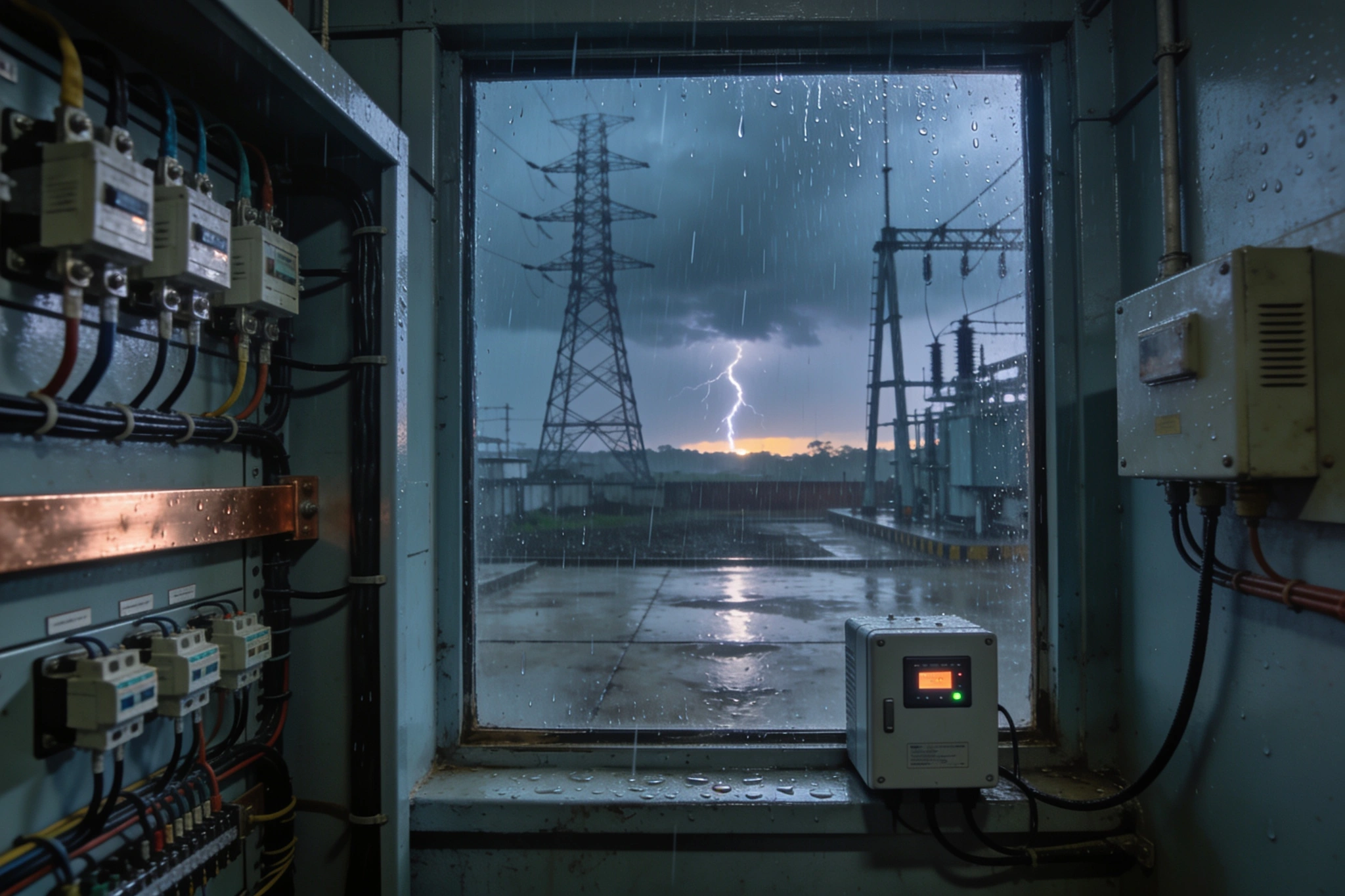
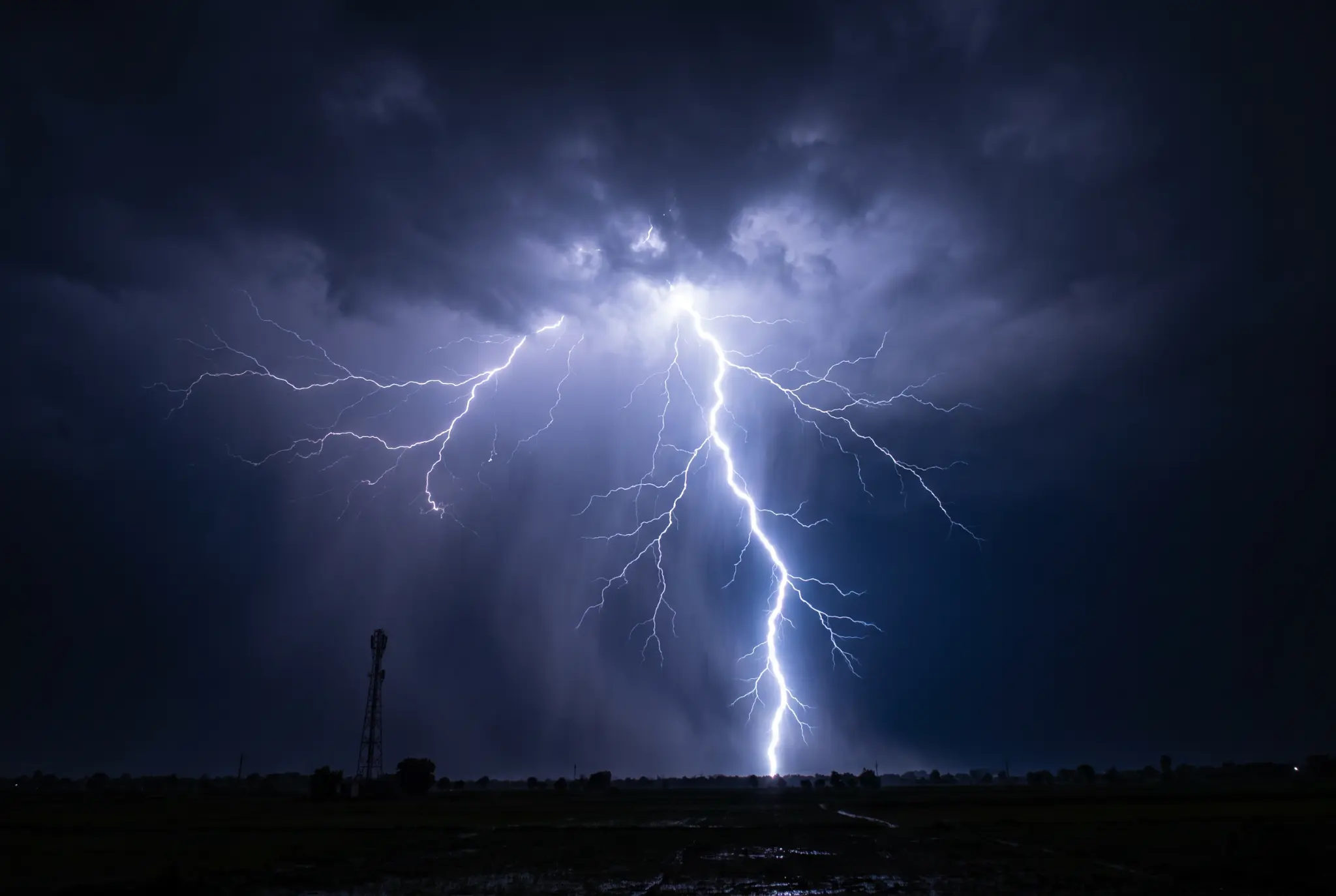
A storm does not have to hit your roof to ruin your week.
It can hit a 66 kV or 220 kV line two kilometres away. The feeder trips. The plant flickers. Then the quiet damage shows up: a PLC card, an NVR, a radio, a drive that “just died.” That chain is the real story of lightning grid disturbance equipment damaging the India monsoon.
Some facility and utility reviews put lightning behind a large share of weather-linked grid trouble in monsoon states in some samples, around four events in ten. Treat that as a working range, not a carved statute. What you can treat as fact is simpler. Load-despatch logs in the east and north-east still name lightning as the cause of 132 kV and 220 kV line trips. IITM-Pune mapping puts a heavy cloud-to-ground belt across eastern and central India. Kolkata and the south Bengal–north Odisha stretch sit near the hottest part of that map. Bihar and Uttar Pradesh stay high on lightning deaths. Coastal Andhra and parts of Karnataka take hard pre-monsoon and monsoon pulses.
If you run a plant, a campus, a hospital or a tower shelter in those belts, the grid event is only the first paragraph. The equipment event is the second.
This article is for facility managers and plant heads. It is not another “what is digital grounding” explainer. It is how a grid surge becomes a board failure and why earthing protection for electrical equipment in monsoon season has to be one reference, not five pits.
What “grid disturbance” looks like from the plant gate
On the utility side, lightning does two things.
It flashes across an insulator. The line trips. That is the outage you see on the SCADA.
It also puts a steep impulse onto the conductor. The high-voltage kit is built to stand very large peaks. A 220 kV yard is insulated in the thousand-kilovolt class. Your LT board is not. A fraction of that wave still travels toward the transformer, toward the 11 kV or 415 V side, and toward anything bonded to the same metal.
So the plant sees a blink, a transfer, or a “nothing happened.” Then a card is dead. Teams call it a power cut. It was a surge that used the cut as cover.
Two doors at once
A building has more than one copper path to the world.
The power door. The incomer, the bus, the UPS, the drivers. A surge on the feeder arrives here first. If the only defence is the UPS, you have defended the outage, not the spike.
The signal door. Ethernet, PoE cameras, coaxial, a leased line, a radio feeder. Those cables run outside, along trays, along compound walls. The same storm that hits the 66 kV line hits those pairs. The pulse can walk into the NVR and the PLC in the same second the lights flicker.
If power and data do not share one low-impedance earth, they sit at different voltages for a few microseconds. Lightning lives in microseconds. The insulation between a camera port and a power supply does not.
That is why a rod on the terrace and a pit in the garden can both “pass the test” and the electronics still die. Lightning protection for the structure is one job. Earthing protection for electrical equipment is another.
Why one reference beats five pits
Monsoon soil lies.
A pit that reads well in August can drift when the ground dries or when the fill was never good. Rock, sand and made-up plots make it worse. Each panel with its own pit then becomes its own island. During a surge the islands move. The cable between them becomes the fuse.
A digital grounding device is used to give the electronics zone one short, honest path a single low-impedance reference the surge protectors can dump into. It does not replace a building earth grid. It stops the boards from floating against each other at the speed of the strike.
Put surge protectors at the doors: power at the receiver and the electronics board, RJ-45 / PoE on network copper, coaxial on video or RF. Then bond those devices to the same reference. If they dump into different pits, you have only moved the spark.
IEC 62305 calls this zone thinking. LPZ 0 is exposed outside. LPZ 1 and 2 are the rooms where the PLC and the server live. Energy has to drop at each door. Designers use that IEC 62305 frame for the building. The monsoon does not read the drawing. The drawing still has to exist.
What this season already showed
You do not need a 2024 paper to see the pattern.
Mid-September 2026 still produced lightning deaths in Maharashtra. Storms in Lucknow and Etawah took poles and feeders down for hours. A network-cabinet fire in Ambedkar Nagar left tens of thousands without mobile data after a short on the tower system. None of those headlines said “earthing.” All of them are the same physics at different scales.
We already wrote the electronics version of this story why towers and CCTV fail in the storm. This page is the grid-to-building version. Same season. Different door.
What a plant annex should say
Keep it short enough that a consultant will paste it.
- Name the incoming voltage and that the UPS is not the surge plan.
- Require lightning design for the structure, not only a rod.
- Require surge protectors by door: power, copper data, RF.
- Require one reference for the electronics zone, measured after the first heavy storm, not only at commissioning.
- Say that power earth and signal earth meet at that reference.
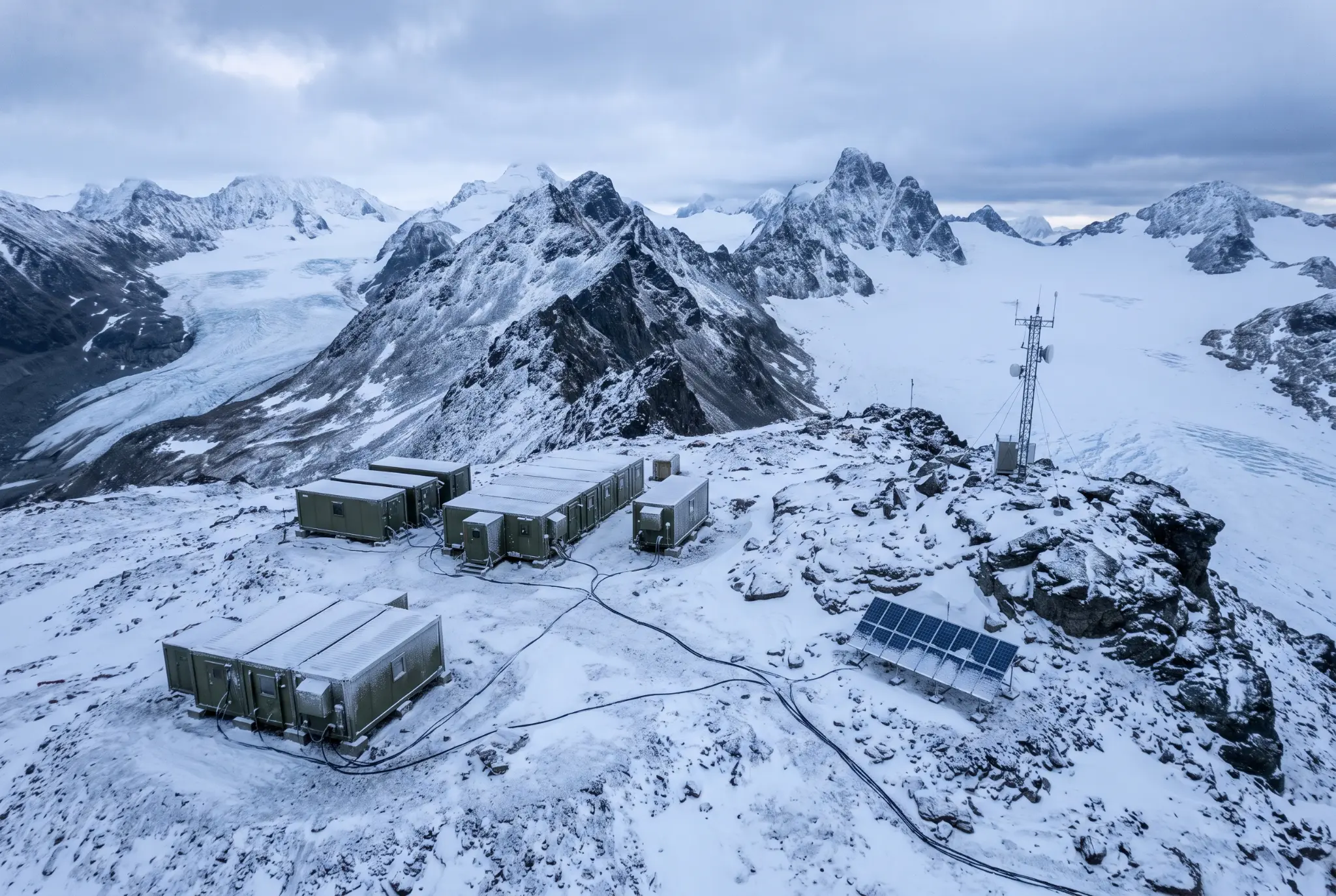
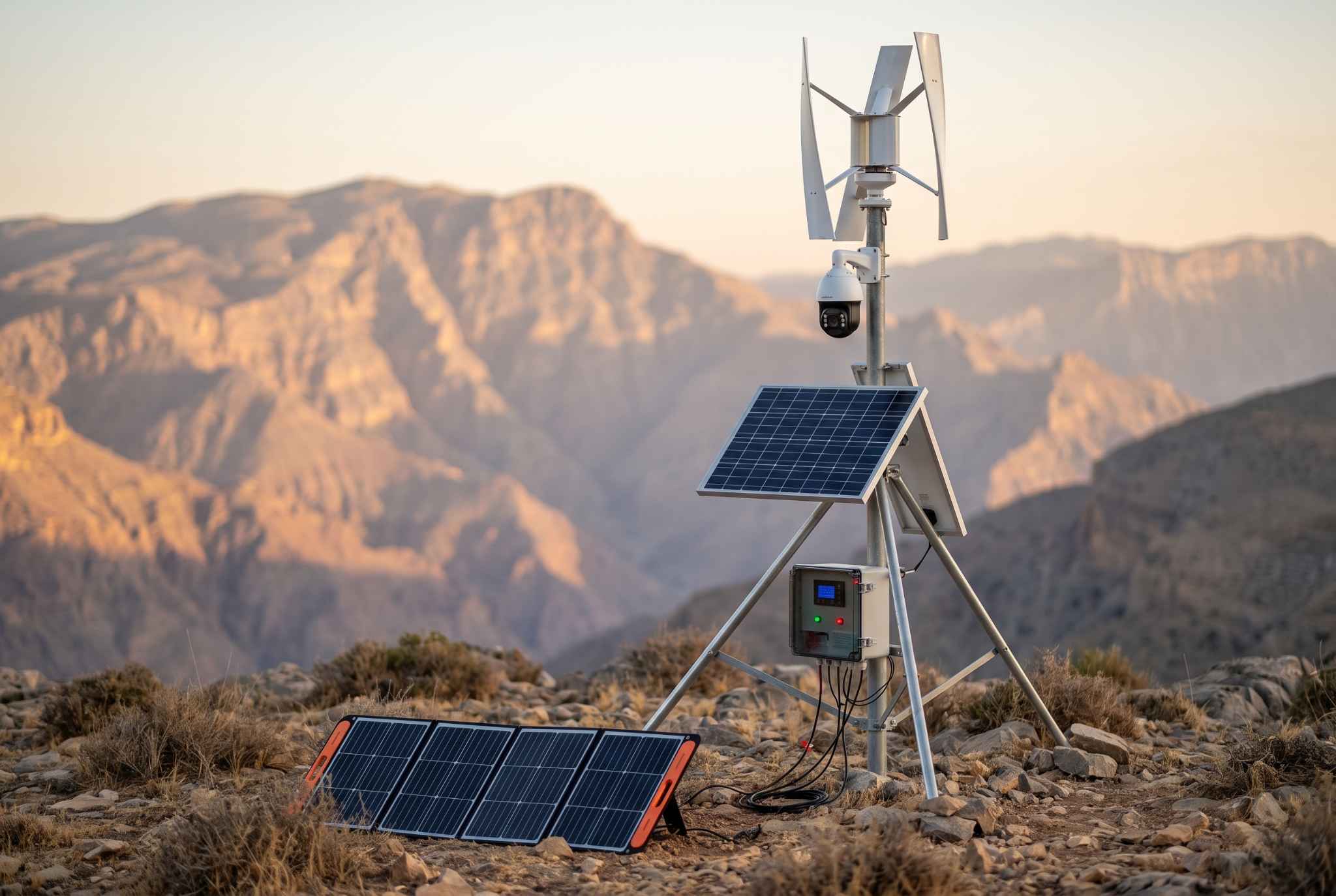
If the site also has cameras on poles or a weak-grid shelter, treat those as small sites. A hybrid power box with earth built in belongs there. It does not replace the plant incomer.
Who this is for
Plant heads who lose a drive every monsoon and still have a “healthy” earth report. Facility managers at hospitals, airports and campuses in UP, Bihar, Andhra, coastal Karnataka and the eastern belt. EPCs writing the electrical annex. Tower and ISP engineers whose shelter sits under the same feeder that just tripped.
Homeowners and shop owners in high-surge belts see a smaller version: inverter, CCTV, broadband ONT. The two doors are the same.
What to do with Rasnal
Send the site type, the incoming supply, and which cables leave the building. Ask for a one-page zone sketch structure lightning, door protectors, one electronics earth not a brochure.
Call +91 94172 88831 or write to Rasnal.
SCO-16, Industrial Area Phase-2, Chandigarh.
The grid will trip again this season. The question is whether the surge stops at the door or finishes inside the board.
Frequently Asked Question
1. Can lightning damage my machines if it never hits my building?
Yes. A strike on a nearby line or pole can send a spike down the feeder and down outdoor data cables. The building can look fine. The card still dies.
2. Is a UPS enough in monsoon season?
No. A UPS covers a break in supply. A surge is a punch that can arrive before or during that break. You still need protectors at the board and on the data lines.
3. Why do power and camera cables both need protection?
Because the same storm uses both doors. If only power is protected, the pulse walks in through Ethernet or coaxial and finds the same equipment.
4. We already have earth pits. Why add digital earthing?
Pits depend on soil. In monsoon states that reading moves. Digital earthing gives the electronics a short path that does not wait for the ground to stay wet.
5. Which parts of India are highest risk?
IITM and IMD maps put a heavy belt across eastern and central India, with Bihar and Uttar Pradesh high on deaths and coastal Andhra and parts of Karnataka taking hard seasonal pulses. Treat any exposed feeder as a risk.
Explore Categories
.webp)
Digital Grounding devices
Industrial & Network Solutions
Solar & Smart Energy
Fire Safety Systems
Surge Protection
CCTV & Security
Solar Energy