


Single Phase or Three Phase. Which Earth Device Fits Your Board.
October 15, 2026
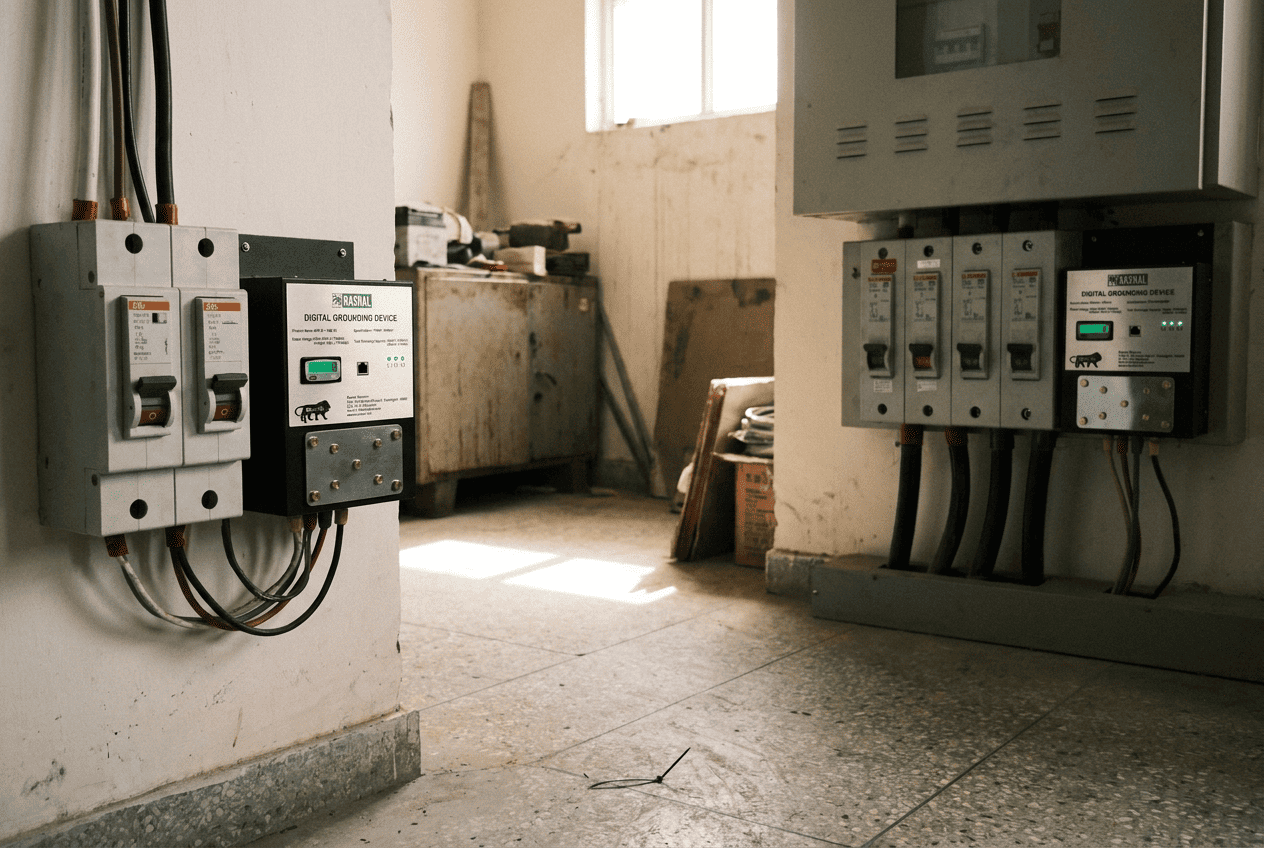
You have decided to protect your equipment from surges. Good decision. Now comes the question that stops many buyers: do you need a single phase or a three phase digital earthing unit?
The answer is simple. It does not depend on how big your building is, how many machines you run, or how many kilowatts you use. It depends on one thing: the supply that feeds the board where the unit will be fitted.
This guide gives you a clear rule, a quick way to check your board, a side-by-side look at Rasnal's VKP-1-AC and VKP-03-AC digital grounding devices, and the mistakes buyers make most often. If you are searching for "digital earthing 1 phase" or "digital earthing 3 phase", you should be able to decide in about five minutes.
How to Tell If Your Board Is Single Phase or Three Phase
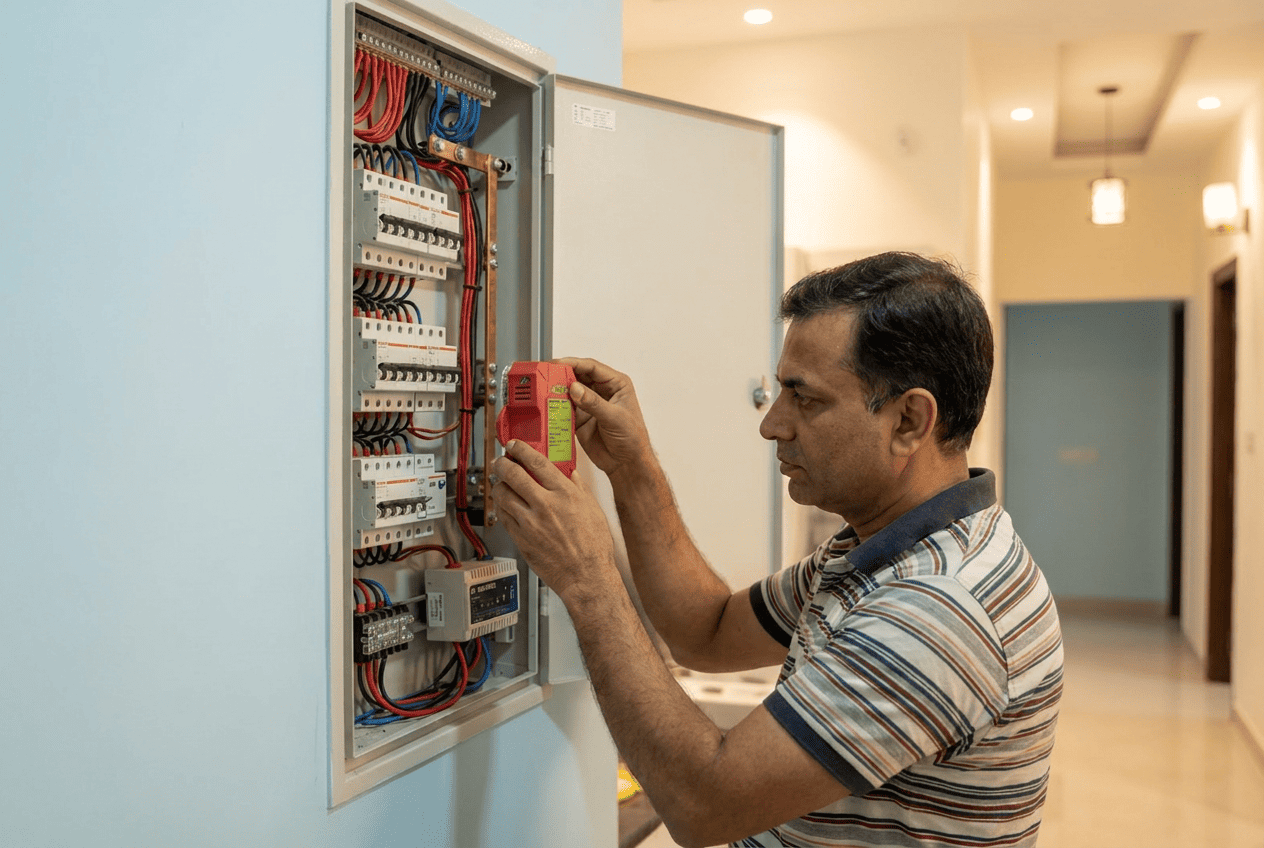
Before you look at any product, find out what kind of supply your board has. You do not need to open anything. Check these four things:
- Your electricity bill or meter. The connection type is usually printed as single phase or three phase.
- The main switch or MCB. Single phase boards normally use a two-pole breaker (phase and neutral). Three phase boards use a four-pole breaker, or a three-pole breaker with a neutral link.
- The voltage. About 230 V between phase and neutral points to single phase. About 415 V between any two phases points to three phase.
- The incoming cables. A single phase supply brings in a phase, a neutral and an earth. A three phase supply brings in three phases (often marked R, Y, B), a neutral and an earth.
A safety note: never open a live panel to check. If you are unsure, ask a licensed electrician. It takes a minute, and it avoids buying the wrong unit.
Why the Number of Phases Matters
A surge does not travel in only one way. It can appear between a live wire and neutral, between a live wire and earth, or between neutral and earth. Each of these pairs is called a mode of protection, and a good digital earthing unit must cover every pair on your board.
- A single phase board has three pairs: live to neutral, live to earth, and earth to neutral. The VKP-1-AC covers these three modes.
- A three phase, four wire board has seven pairs: L1-N, L2-N, L3-N, L1-G, L2-G, L3-G and G-N. The VKP-03-AC covers all seven.
So a single phase unit is not a "smaller version" of a three phase unit. It is built for a different supply. It simply has no connection points for the second and third phase.
Voltage is the other reason. According to the Rasnal product pages, the VKP-1-AC is rated for 100–275 V AC on a single phase, with a maximum continuous operating voltage of 275 V (live to neutral). The VKP-03-AC is rated for 380–415 V AC, three phase. These ratings are built around the supply the unit will sit on.
VKP-1-AC vs VKP-03-AC at a Glance
Always check the latest datasheet on the product page before you place an order.
Notice that the protection quality per mode is the same on both units. What changes is the supply they connect to, the number of modes they cover, and the total surge handling.
Which Unit Fits Which Site
Choose the VKP-1-AC if your board is single phase. This is the usual case for:
- Homes and apartments with a single phase connection
- Shops, clinics and small offices
- Single phase distribution boards feeding CCTV, network racks, billing counters or an EPABX
- Any sub-board that is fed from just one phase of a larger building
Choose the VKP-03-AC if your board is three phase. This is the usual case for:
- Factories and plant LT panels
- Data centre and server room incomers
- Hospitals, airports and large commercial buildings
- Telecom and ISP sites with a three phase supply
- Workshops running three phase motors and machines
Many sites need both. A building often has a three phase main panel and single phase sub-boards for sensitive equipment. In that case, the three phase unit goes at the main panel and single phase units can go on the single phase boards that need extra protection. Your electrician or Rasnal's engineers can confirm the best spots for your layout.
Can I Use a 1-Phase Unit on a 3-Phase Board?
No, not as a replacement for a three phase unit. There are three clear reasons:
- It covers only one phase. The VKP-1-AC protects three modes. A three phase board has seven. The other two phases would be left without protection, even though the board looks "covered".
- The voltage does not match. Between two phases, a three phase supply carries about 415 V. The VKP-1-AC has a maximum continuous operating voltage of 275 V (live to neutral). It must never be wired across two phases.
- It is not what the unit is built for. Rasnal offers a separate three phase model, the VKP-03-AC, for exactly this reason.
There is one exception, and it is a simple one. If a board is a single phase sub-board that is fed from one phase of a three phase supply, then it is a single phase board. The VKP-1-AC is the right choice for that board.
What about the reverse, a three phase unit on a single phase board? The VKP-03-AC is rated for a 380–415 V three phase supply, so it is not designed for a single phase board. Pick the VKP-1-AC instead.
Four Common Mistakes When Choosing
1. Choosing by load size. A big shop on a single phase connection still needs a single phase unit. A small workshop with one three phase motor needs a three phase unit. Phase decides the model, not kilowatts.
2. Assuming the whole building is three phase. Check each board you want to protect. Main panels are often three phase, while many sub-boards are single phase.
3. Using single phase units to imitate a three phase unit. Fitting one on each phase is not the same as a unit designed and tested for a three phase, four wire system. Use the VKP-03-AC.
4. Skipping the professional check. Wiring and fitting should be done by a licensed electrician who follows the installation instructions on the product page.
What a Digital Earthing Unit Does, and What It Does Not Do
Both units work on the same idea. Rasnal's digital grounding devices detect a surge, convert its energy into heat, and let it go through a low impedance path. They also give equipotential bonding to the connected equipment, which helps remove static charge and leakage current. If you want the full background, read our guide on what a digital grounding device is and how it works.
It is also worth being clear about the limits. In Rasnal's own grounding table, the VKP is rated "very good" for surge, lightning, signal, PLC and communication grounds, but it is marked "not" for power system safety earths. So a digital earthing unit protects your electronics. It does not take over the safety earth that electrical rules require for your installation. Check the rules that apply to your site, such as those from the Central Electricity Authority (CEA), and ask Rasnal's team how the unit fits with your existing earthing.
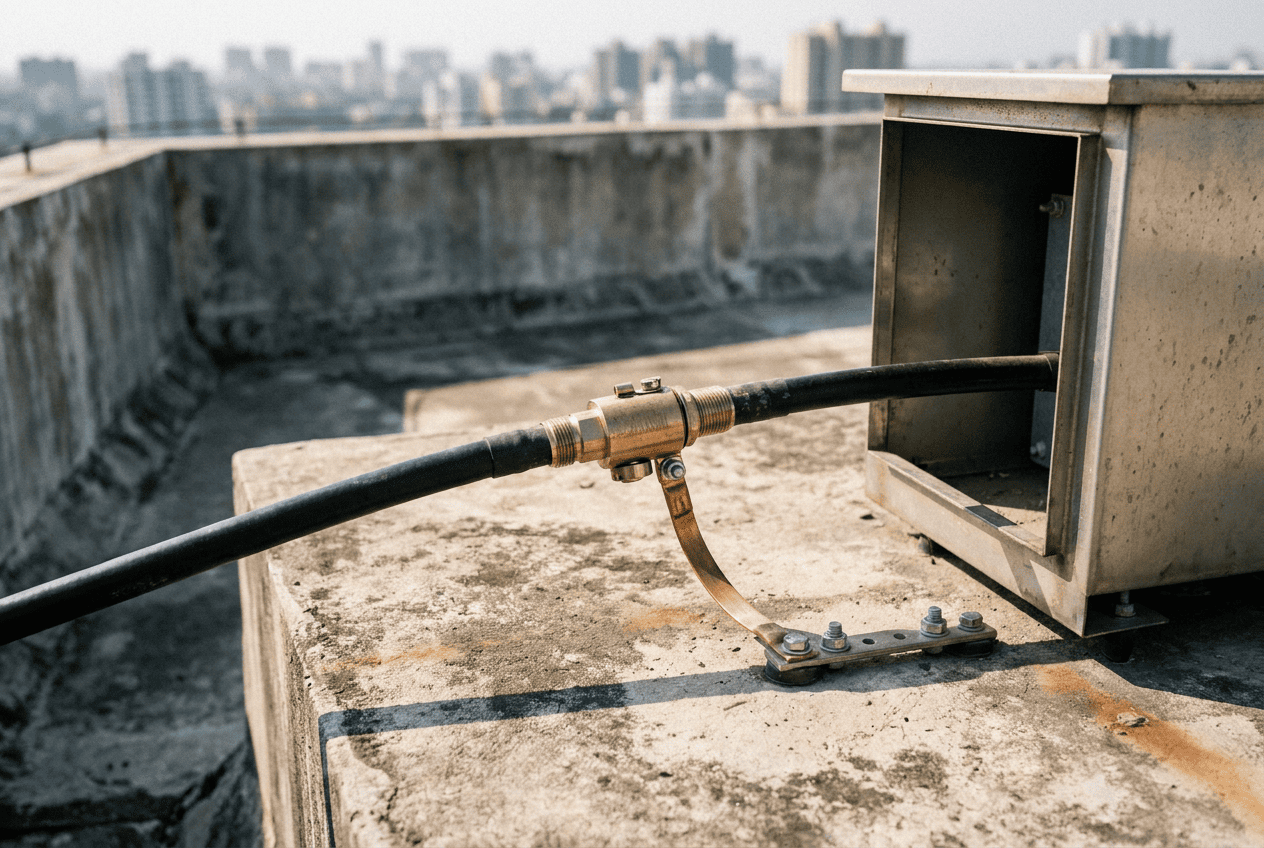
Surges also enter through signal lines, not only through the power supply. If your site has outdoor camera cables, antennas or network lines, protect those too with a coaxial surge protector or an RJ-45 surge protector for PoE. To understand why surges cause so much damage in India, see our article on lightning and grid disturbance equipment damage.
What If Your Supply Is Not Standard AC?
Not every site runs on a standard indoor AC panel. Rasnal also has a specialised range for DC systems working on 12 V to 175 V, and for outdoor AC installations that need an IP66 enclosure. See the outdoor and DC digital grounding models. You can also look at the VKP-01 Premium, Advanced Monitoring and High Surge models if your site needs more than the standard units.
For data centres and IT rooms, where a wrong match can mean downtime, our guide on data centre earthing and surge protection in India is a good next read.
How to Order the Right Unit
Getting the right model is a short process.
- Note your supply type and voltage. Single phase or three phase, from the bill, the breaker or the nameplate.
- Decide where you want protection. Main incomer, a sub-board, a server rack or a CCTV board.
- Contact Rasnal's team. Use the contact page and share a photo of the board nameplate and a short note about the site.
- Confirm the model. You will get a clear match: VKP-1-AC for single phase, VKP-03-AC for three phase.
- Install with a licensed electrician. Follow the installation instructions on the product page.
- Check it regularly. The LED indicators show the working status, and the 6-digit surge counter shows how many surge events the unit has handled.
Choosing between a single phase and a three phase digital earthing unit is easier than it looks. Look at the supply on your board. If it is one phase, the VKP-1-AC is your unit. If it is three phase, the VKP-03-AC is your unit. A mismatch leaves part of your board unprotected, so it is worth two minutes of checking before you buy.
Not sure which one your board needs? Talk to Rasnal's engineers. Share your board details and get a straight answer before you order. You can also browse all digital grounding devices on our site.
FAQs
Q1. Do I need a 1-phase or 3-phase digital earthing unit?
It depends on the supply feeding your board. If the board has one live wire, a neutral and an earth (about 230 V), you need a 1-phase unit such as the VKP-1-AC. If it has three live wires, a neutral and an earth (about 415 V), you need a 3-phase unit such as the VKP-03-AC
Q2. How do I know if my board is single phase or three phase?
Check your electricity bill for the connection type, look at the main breaker (two-pole usually means single phase, four-pole usually means three phase), and count the incoming cables. If you are unsure, ask a licensed electrician. Do not open a live panel yourself.
Q3. Can I use a 1-phase digital earthing unit on a 3-phase board?
Not as a replacement for a 3-phase unit. A 1-phase unit like the VKP-1-AC covers only one phase (three modes of protection), while a three phase board has seven, and it is not rated for the 415 V between phases. The exception is a single phase sub-board fed from one phase, where a 1-phase unit is the right choice.
Q4. What is the difference between the VKP-1-AC and the VKP-03-AC?
The VKP-1-AC is for single phase supplies (100–275 V AC, 3 modes of protection, 120 kA maximum surge handling). The VKP-03-AC is for three phase, four wire supplies (380–415 V AC, 7 modes of protection, 240 kA maximum surge handling).
Q5. Does a digital earthing unit replace my earth pit?
No. A digital earthing unit is designed to protect electronics from surges, lightning and static by giving a low impedance, equipotential ground. It does not take the place of the power system safety earth that electrical rules require. Ask Rasnal's team how it fits with your existing earthing.
Explore Categories
.webp)
Digital Grounding devices
Industrial & Network Solutions
Solar & Smart Energy
Fire Safety Systems
Surge Protection
CCTV & Security
Solar Energy