



Water Does Not Belong on a Live Electrical Panel.
October 15, 2026
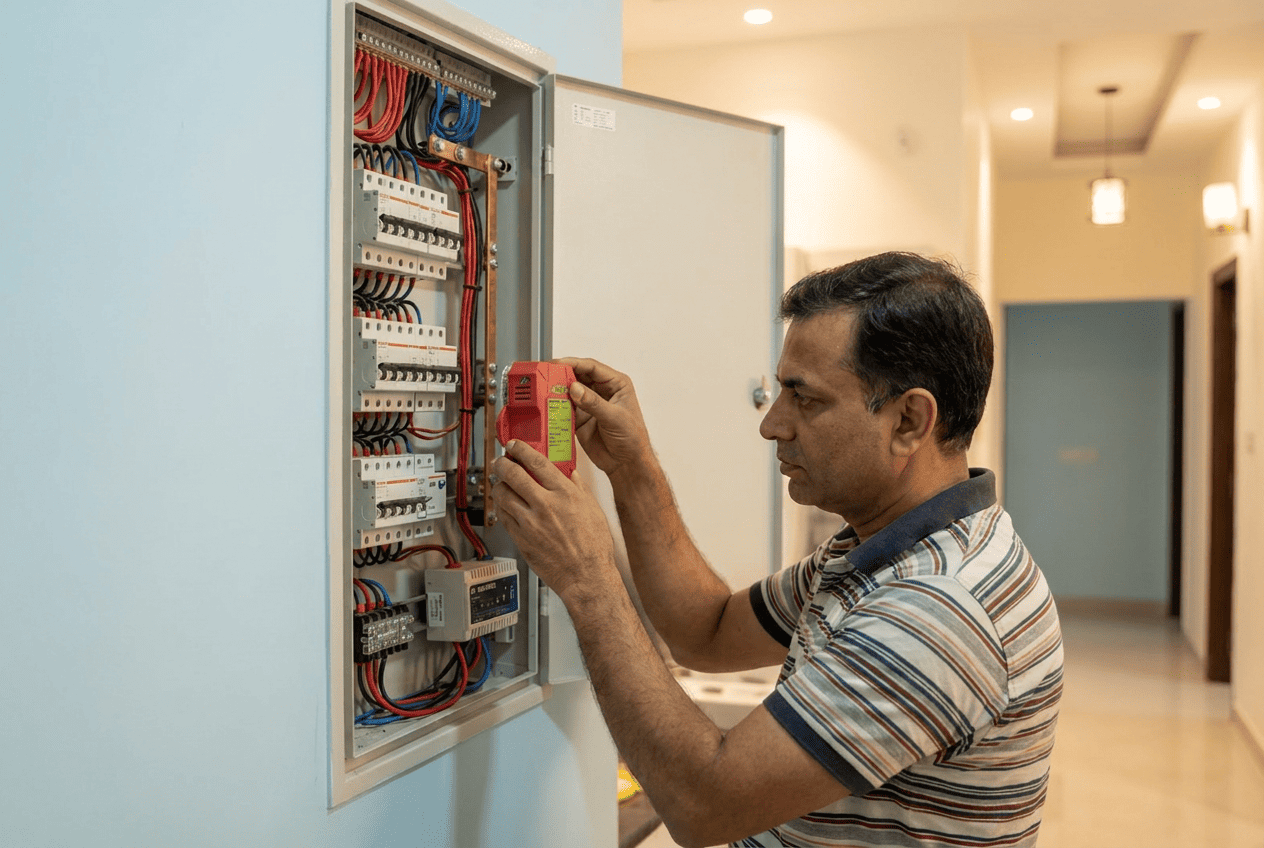
If you look after an electrical room, a server cupboard, a telecom shelter or a plant's control panels, you have probably asked one practical question: what fire device can I actually fit on a live panel?
This guide answers it in plain words. It explains why water and standard sprinklers are the wrong tool, how a CO2 option compares, what a heat aerosol device does, and where it goes. By the end, you should be able to match a device to your panel or cupboard.
Why Water and Standard Sprinklers Do Not Belong on a Live Panel
Water is the first thing most people think of for a fire. On electrical equipment, it causes three problems.
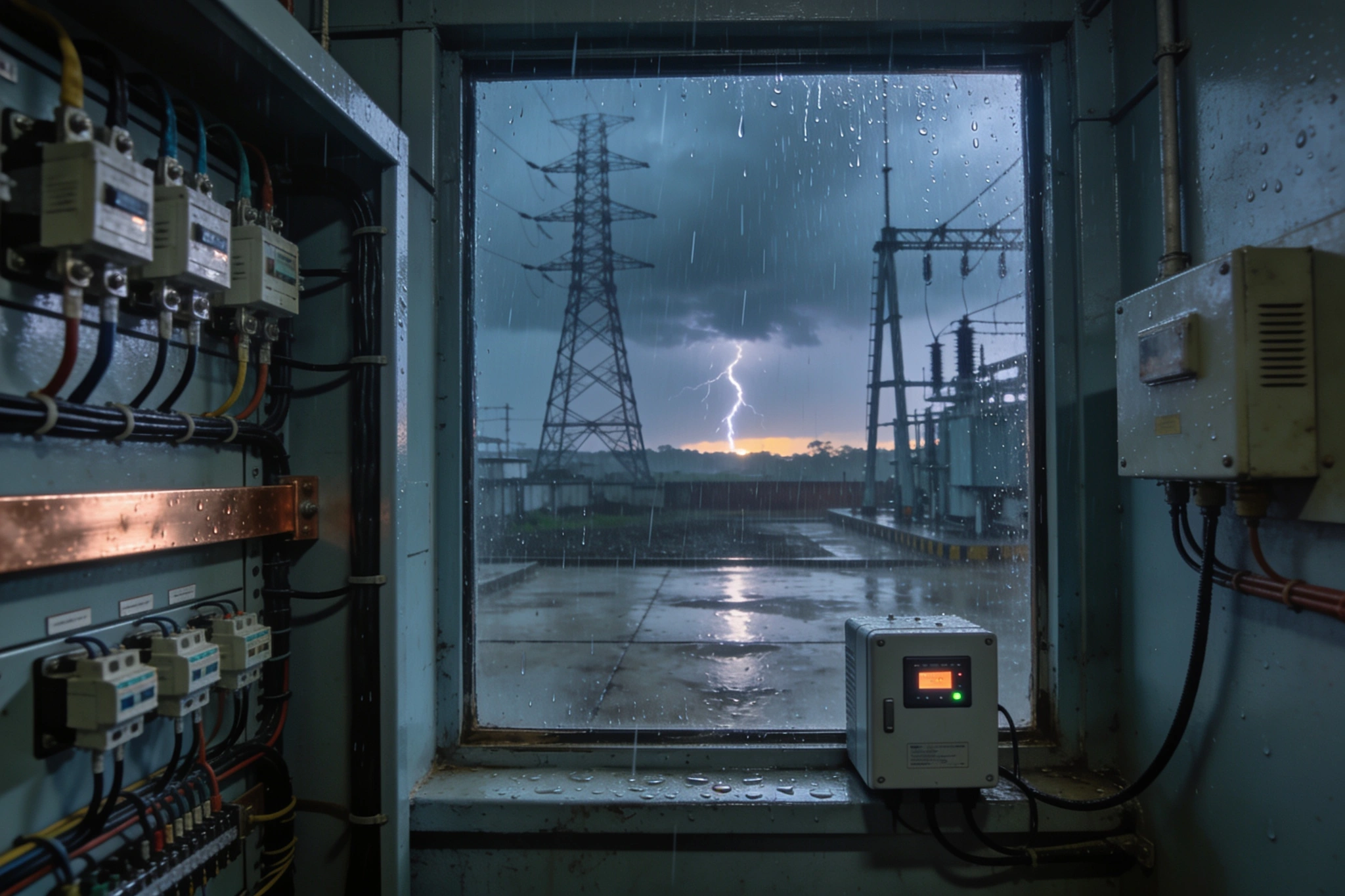
- Water can conduct electricity. Spraying it on a live panel can cause short circuits and further damage to the equipment, and it puts anyone nearby at risk of shock.
- A sprinkler protects the room, not the panel. Sprinkler heads sit at the ceiling and react to heat in the room. A fire inside a closed cabinet may burn for some time before enough heat reaches them.
- The damage spreads. Even when water puts out the fire, it can wet neighbouring panels, racks and cables that were never on fire.
None of this means a building should have no sprinklers. Room-level protection has its own job. The point is narrower: for the inside of a live panel, you need something made for that space.
Is a CO2 Extinguisher Safe for an Electrical Panel?
Fair question, and the answer needs care. CO2 does not conduct electricity, and it is a normal choice for a trained person to use on an electrical fire. So the problem is not the gas. The problem is how it is used.
- A hand-held CO2 extinguisher needs a person. Electrical rooms, telecom shelters and cabinets are often unattended, especially at night.
- A fire inside a closed cabinet is hard to reach. A hand-held unit is aimed at a fire you can see.
- A piped CO2 flooding system solves the unattended problem, but it is a big system. It needs cylinders, pipework, release controls and a sealed room. That is a lot of equipment to protect one panel or one cupboard.
If you want the full side-by-side, read our guide on aerosol vs CO2 vs sprinklers for electrical panels. Here is the short version:
What Is a Heat Aerosol Fire Suppression Device?
A heat aerosol fire suppression device is a small, self-contained unit that you fit inside an enclosed electrical space. It has a heat-sensitive trigger wire. When the heat inside the enclosure reaches the wire's threshold, the unit activates on its own and releases aerosol into the space to stop the fire.
Think of it as a smoke alarm and an extinguisher in one small box, with no mains connection. That is why this type of aerosol fire suppression for electrical panels has become popular for places where pipes and cylinders do not fit.
Rasnal's version is the HAFED, short for Heat Aerosol Fire Extinguishing Device. If you are searching for a Rasnal aerosol device, this is the range.
How It Works, Step by Step
- It is fitted inside the enclosure. The unit mounts with industrial 3M adhesive. There is no wiring to run.
- Heat builds up if a fire starts. The heat-sensitive trigger wire reaches its threshold temperature.
- The device activates by itself. No switch, no button, no power supply and no person needed.
- Aerosol fills the enclosure. The release is instant, and it works to suppress the fire quickly.
- You replace the unit. After it activates, the device is replaced.
Because it needs no power supply, it can still work if the panel loses power during a fault. That matters for electrical panel fire protection, where the fire and the power failure often arrive together.
Meet the Rasnal HAFED: Key Specifications
A few of these are worth explaining in simple terms.
- Operating range of -50°C to +90°C. This covers hot panels, outdoor cabinets and cold regions, which suits Indian site conditions from the plains to the mountains.
- Extinguishing density of 100 g/m³. This is the amount of aerosol per cubic metre of protected space that the device is designed around.
- Thermal clearance. Rasnal lists clearance figures for the area around the unit. In simple terms, the closer you are to the unit when it discharges, the hotter it gets, so leave space around it and follow the installation instructions.
- EN 15276 standards. These are European standards for aerosol fire suppression, and both HAFED variants are certified to them.
Two Variants: HAFED-28 and HAFED-07
A simple rule: if a standard-size unit fits comfortably in your enclosure, look at the HAFED-28. If space is tight, look at the HAFED-07. If you are unsure, Rasnal's team will recommend the right one from the product page query form.
Where to Install a Heat Aerosol Fire Suppression Device
This is the next question most buyers ask. According to Rasnal's product page, the HAFED is made for enclosed electrical and industrial spaces, such as:
- Electrical panels and distribution boards
- MCB boxes and server enclosures
- Telecom, CCTV and industrial control boxes
- Energy-storage units and inverter cabinets
- Lithium-ion battery packs
- EV chargers and charging piles
- Vehicle engines and small machinery
A few practical points when you plan the install:
- Think enclosure, not room. The device is built for a closed panel, cabinet or box. It does not replace protection for an entire room or hall.
- Leave clearance. Keep the thermal clearance figures above in mind when you choose the spot, so heat-sensitive parts are not right next to the unit.
- Use the adhesive mount. The unit fixes in place with 3M adhesive, so there is no drilling or wiring inside the panel.
- Confirm the exact spot with Rasnal's team. Every panel layout is different. Send a photo and the dimensions, and ask where the unit and its trigger wire should sit.
What a Heat Aerosol Device Does Not Do
It helps to be clear about the limits, because it makes the buying decision easier.
- It is for enclosed spaces. It protects the panel or cabinet it sits in. Your building may still need room-level protection, and your fire officer or insurer may set requirements.
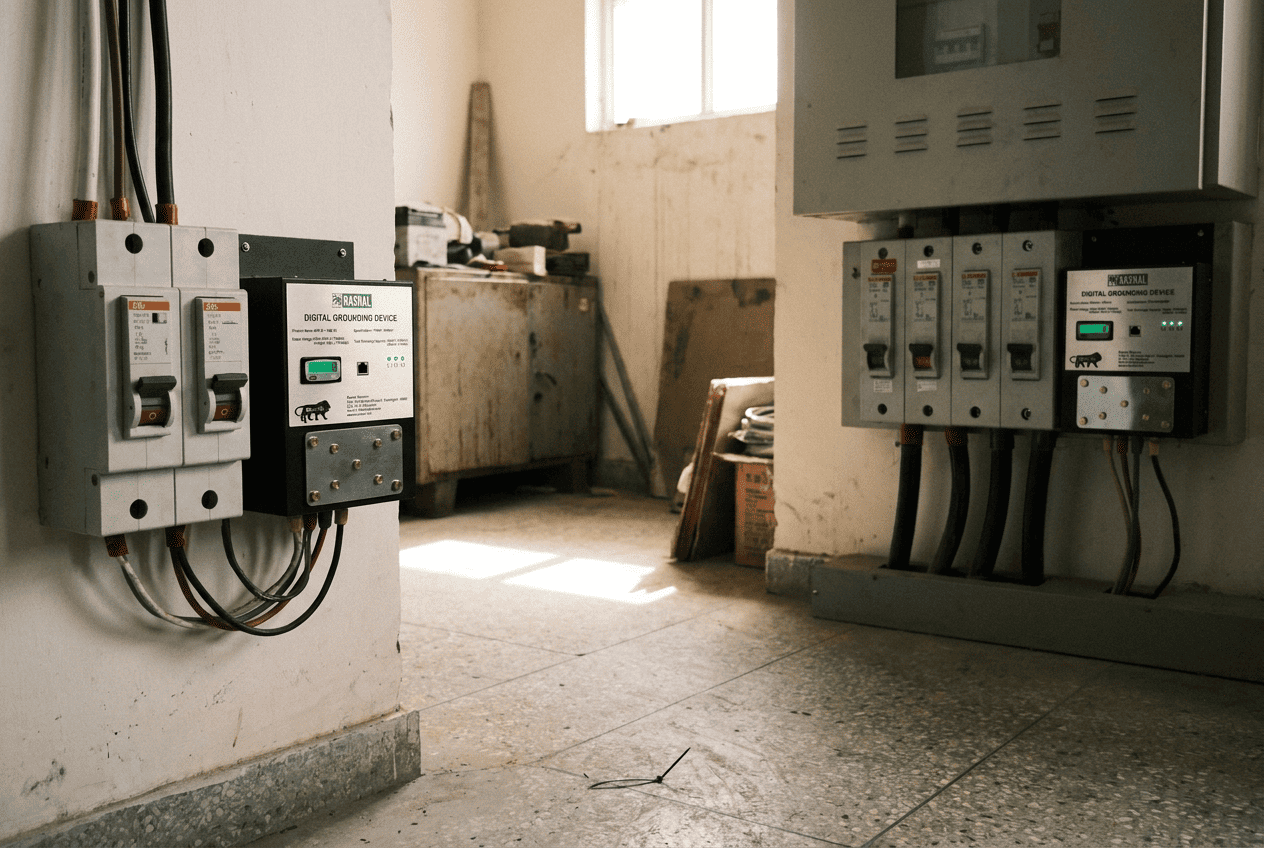
- It stops a fire. It does not prevent a fault. Surge damage, loose connections and overloads are separate problems. Many sites pair suppression with surge protection and digital grounding to reduce the chance of a burn-out in the first place.
- It is replaced after use. Once it activates, or at the end of its service life, the unit is replaced.
- Check the panel after a discharge. Rasnal states that aerosol suppression leaves no residue on circuit boards and does not conduct electricity. Even so, a qualified electrician should inspect the equipment before it goes back into service.
Who Benefits Most
For businesses and infrastructure teams:
- Data centre and IT managers: server enclosures and small cupboards where gas systems do not fit. Our guide on data centre earthing and surge protection in India covers the other half of the uptime picture.
- Telecom tower operators and ISPs: unmanned shelters, telecom cabinets and CCTV boxes.
- Plant heads in manufacturing: control cabinets and distribution boards on the shop floor.
- Facility managers (hospitals, airports): distribution boards and enclosures in electrical rooms.
- EPC contractors, developers and system integrators: a device that mounts with adhesive and needs no wiring is easy to add to a panel specification.
For homeowners, shop owners and electricians:
- Homeowners with solar or hybrid setups: inverter cabinets and battery packs.
- Small business owners: the shop or office distribution board.
- Residents in power-cut areas: inverter and battery enclosures that run hard through the year.
- Electricians and local contractors: a simple add-on for a client's panel or battery box.
How to Choose and Order the Right Unit
Matching a device to your panel is quick if you follow these steps.
- List the enclosures you want to protect. Panels, distribution boards, server cupboards, battery packs, inverter cabinets or control boxes.
- Note the size and available space in each one. Standard enclosure, or a tight space?
- Pick a variant. HAFED-28 for standard enclosures. HAFED-07 for compact ones.
- Send your details to Rasnal. Use the contact page or the query form on the product page, with a photo of the enclosure and its approximate size.
- Get the recommendation. Rasnal's team will confirm which variant suits your application.
- Fit it and record the date. Install as per the instructions, and note the date so you can plan the replacement at end of service life.
For more options in this range, see Rasnal's fire safety systems.
Water and standard sprinklers are the wrong tools for the inside of a live electrical panel. CO2 does not conduct, but it needs a person or a large system. A heat aerosol fire suppression device fills the gap: small enough to sit inside the enclosure, automatic, with no wiring, and rated for up to 10 years of service.
Not sure which panel or cupboard needs one first, or which variant to pick? Talk to Rasnal's team and send a photo. You can also see the full range on the heat aerosol fire suppression device page.
FAQs
Q1. What fire device can I put on a live electrical panel?
A heat aerosol fire suppression device is made for this. It sits inside the enclosure, activates by itself when its heat-sensitive trigger wire reaches its threshold, and needs no power supply or wiring. Water and standard sprinklers are not suitable for live panels.
Q2. Is a CO2 extinguisher or a sprinkler safe for an electrical panel?
A sprinkler is not suitable, because water can conduct electricity and damage live equipment. A CO2 extinguisher does not conduct electricity and trained people use it on electrical fires, but it needs someone present to use it. A heat aerosol device works automatically inside the enclosure.
Q3. Where do I install a heat aerosol fire suppression device?
Inside enclosed electrical or industrial spaces: electrical panels, distribution boards, MCB boxes, server enclosures, telecom and CCTV boxes, inverter cabinets, battery packs and EV chargers. Rasnal's HAFED mounts with industrial adhesive and needs no wiring.
Q4. Does a heat aerosol device need power or maintenance?
No. Rasnal's HAFED activates through a heat-sensitive trigger wire, with no power supply and no wiring. It is maintenance-free for a service life of up to 10 years, and the unit is replaced after it activates.
Q5. Which should I choose, HAFED-28 or HAFED-07?
Choose the HAFED-28 for standard-size enclosures such as electrical panels, distribution boards, battery packs and control cabinets. Choose the HAFED-07 for compact spaces such as MCB boxes, server enclosures and vehicle engine bays. If you are unsure, send Rasnal your enclosure details and they will recommend one.
Explore Categories
.webp)
Digital Grounding devices
Industrial & Network Solutions
Solar & Smart Energy
Fire Safety Systems
Surge Protection
CCTV & Security
Solar Energy