


Your Solar Panels Face the Sky. So Does Every Surge Path Into Your Inverter.
November 19, 2026
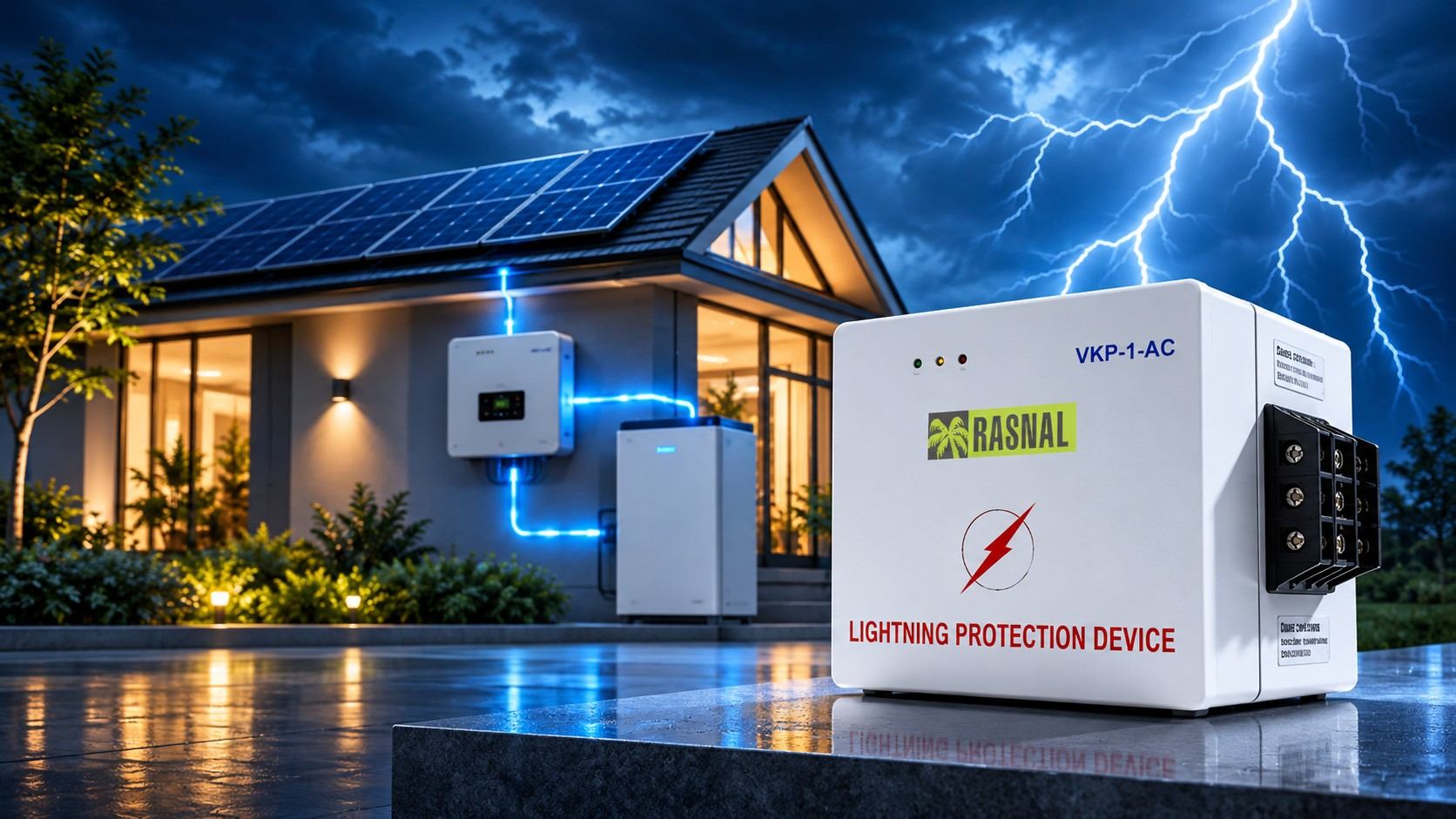
Surge protection for solar inverter systems at home works best in three places: the AC distribution board, the battery and DC side, and the solar panel (PV) strings on the roof. Each one is a separate path for surges, and each needs a device rated for that circuit. For the AC board, Rasnal's VKP-1-AC digital grounding device fits most single phase homes. For 12 V, 24 V and 48 V battery systems, the VKP-01-DC covers the DC side.
A hybrid inverter is often the most expensive electronic item in a home after the battery. It connects to the roof, the battery, the grid and sometimes the internet, all at once. That makes it a meeting point for surges from every direction.
This guide walks through each path, what protects it, how earthing fits in, and how to plan protection without paying for things you do not need.
Why Solar and Hybrid Inverters Are Exposed
- The panels are on the roof. Rooftop arrays and their cables are among the highest metal on a house. Nearby lightning can induce surges on long DC cable runs even without a direct hit.
- The grid brings surges in. Lightning on overhead lines, grid switching and supply fluctuations reach the inverter through its AC connection. Homes in high-surge or frequent power-cut areas see this often.
- The battery adds another circuit. Hybrid systems link a battery bank to the inverter, adding DC wiring and electronics.
- Inverters switch power all day. Their own switching creates fast electrical transients inside the system.
- Monitoring connects to the network. Wi-Fi dongles, Ethernet cables and RS-485 links add data paths.
When a surge damages an inverter, the cost is not only the repair. The home loses backup power, often at the exact moment a storm has cut the grid.
The Three Surge Paths and What Protects Each
The AC side
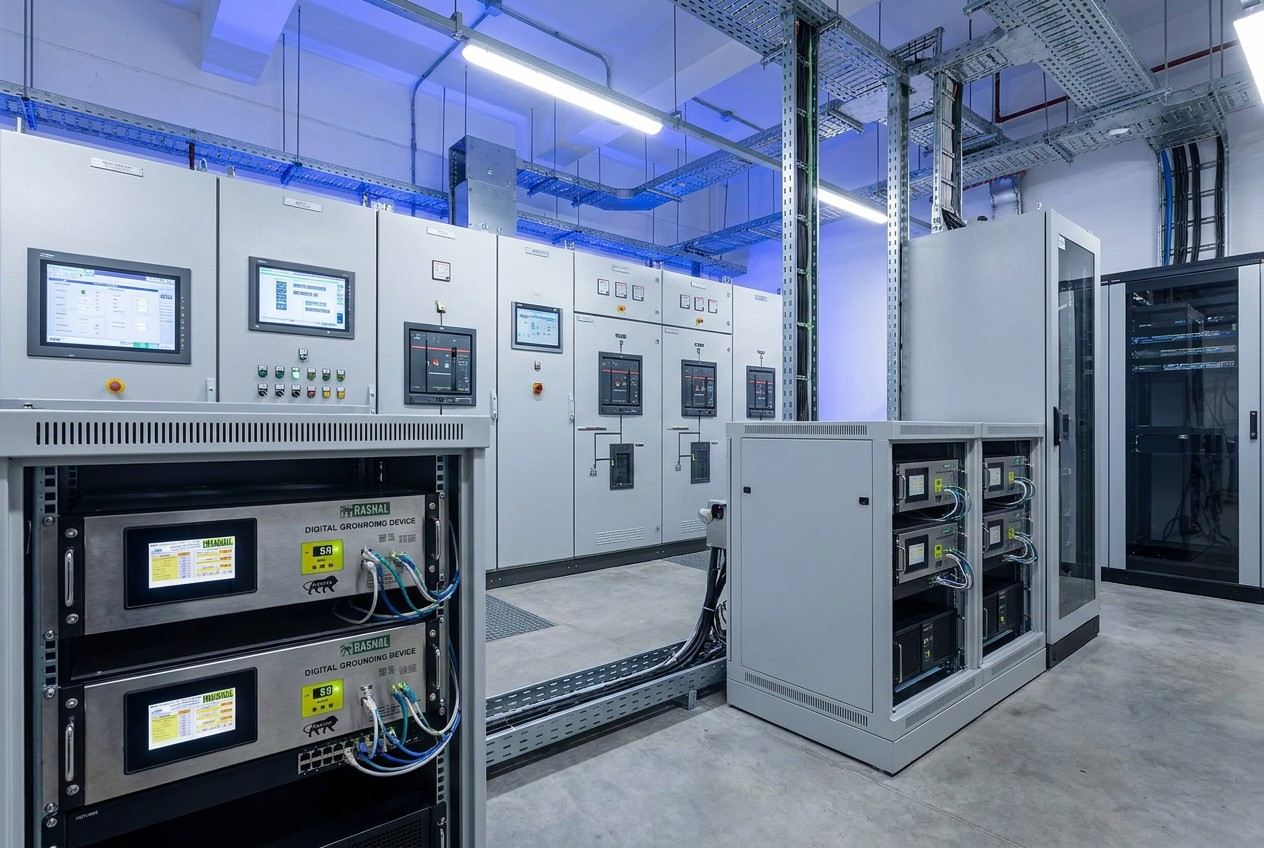
This is the path most homes think of first, and the one Rasnal covers directly. The VKP-1-AC is rated for single phase supplies at 100 to 275 V AC, covers three modes of protection (L-N, L-E and E-N) and has 120 kA maximum surge handling capacity (8/20 µs). Homes on a three phase connection should use the VKP-03-AC on a three phase board.
Beyond surge protection, the VKP gives the board a low impedance, common ground for the inverter and everything else connected to it. Rasnal lists holding earth to neutral voltage below 1 V and enhancing battery life among its key advantages.
The battery side
Most home hybrid systems run their battery at a low DC voltage such as 12 V, 24 V or 48 V. The VKP-01-DC is rated for 12 VDC, 24 VDC, 48 VDC and 110 to 175 VDC (±10%), with 120 kA capacity. Rasnal lists solar and battery storage systems among its main uses, with protection against inverter transients, lightning surges and ground potential rise.
Check your battery's nominal voltage before ordering. High voltage battery systems above the VKP-01-DC's range need a device rated for that voltage.
The PV string side
Roof panels are wired in strings, and string voltages are usually far higher than battery voltages, often several hundred volts DC. Surge protection here must be a PV rated device built for the DC side of solar installations. The relevant international standard is IEC 61643-31, which covers surge protective devices for photovoltaic installations up to 1,500 V DC.
This device is usually fitted in the DC distribution box (DCDB) by the solar installer and must match the string's maximum open circuit voltage. The VKP-01-DC is not designed for high voltage PV strings, so do not use it there. Ask your installer to confirm the PV side protection on the system drawing.
Earthing: The Foundation Under All Surge Protection
Surge protection only works if the surge has a good place to go. That is the job of earthing.
A typical rooftop solar system has several earth connections: the panel mounting structure, the inverter body, the DC and AC distribution boxes, and often a lightning arrester. In India, these follow electrical safety rules and the earthing code. The Central Electricity Authority (CEA) sets electrical safety regulations, and the Ministry of New and Renewable Energy (MNRE) runs the national rooftop solar programmes and their technical guidance. Your installer should follow both.
Two practical points matter for homeowners:
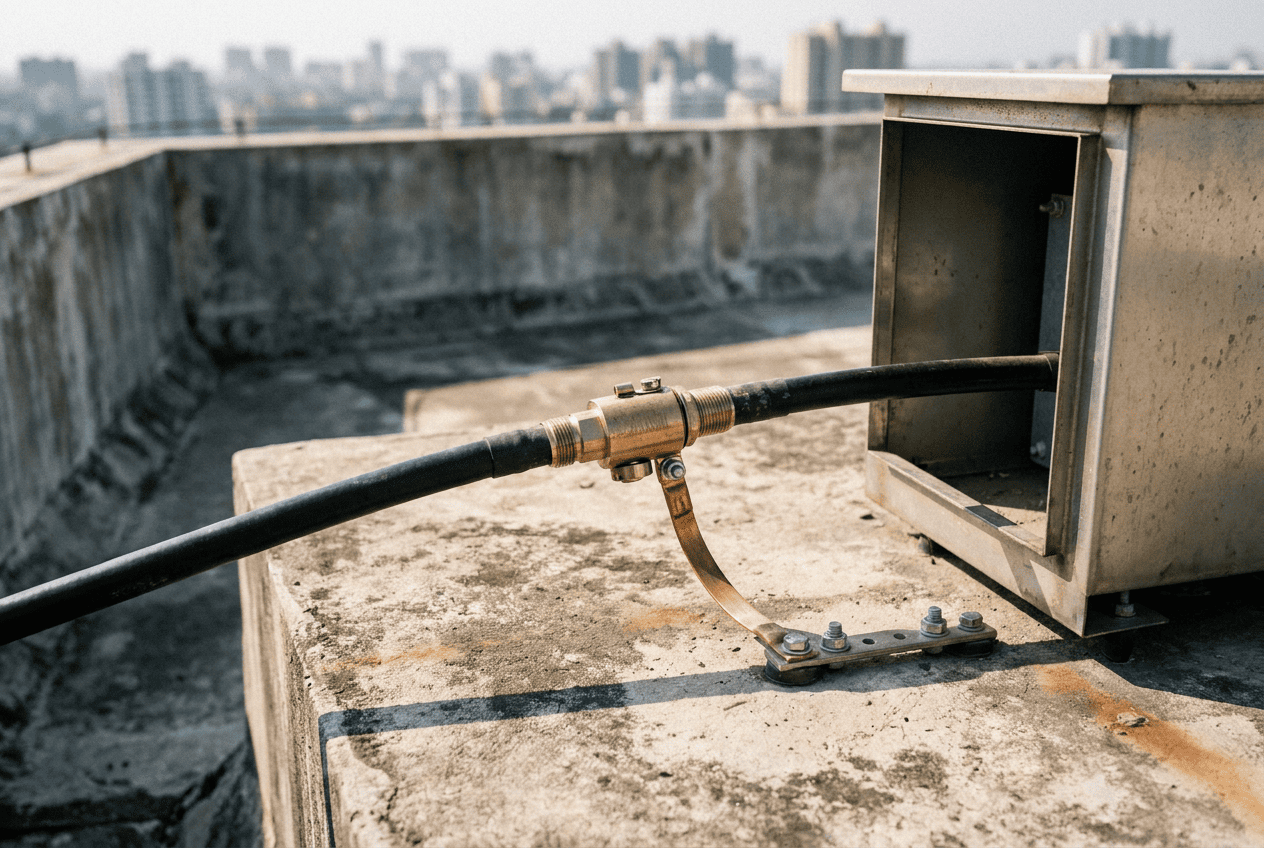
- The earth pit is not the whole story. An earth pit is mainly a safety earth. It carries fault current so breakers trip. Electronics like inverters also need a stable, low impedance reference close to the board. That is the extra layer a digital grounding device adds.
- Bond everything together. Separate earths at different points can sit at different voltages during a nearby strike. Bonding the system's earths into one network keeps them at the same potential, which protects the cables between them.
Lightning Arresters vs Surge Protection
Many homes already have a lightning arrester on the roof and assume the inverter is safe. They are two different things.
A lightning arrester, or air terminal, gives a direct strike a path to ground outside the building. It protects the structure. It does not stop the surges that a nearby strike or the grid pushes along the wires into your electronics. Lightning protection standards such as IEC 62305 treat external lightning protection and surge protection for internal systems as separate layers that work together. Your home needs both.
Don't Forget the Data Line
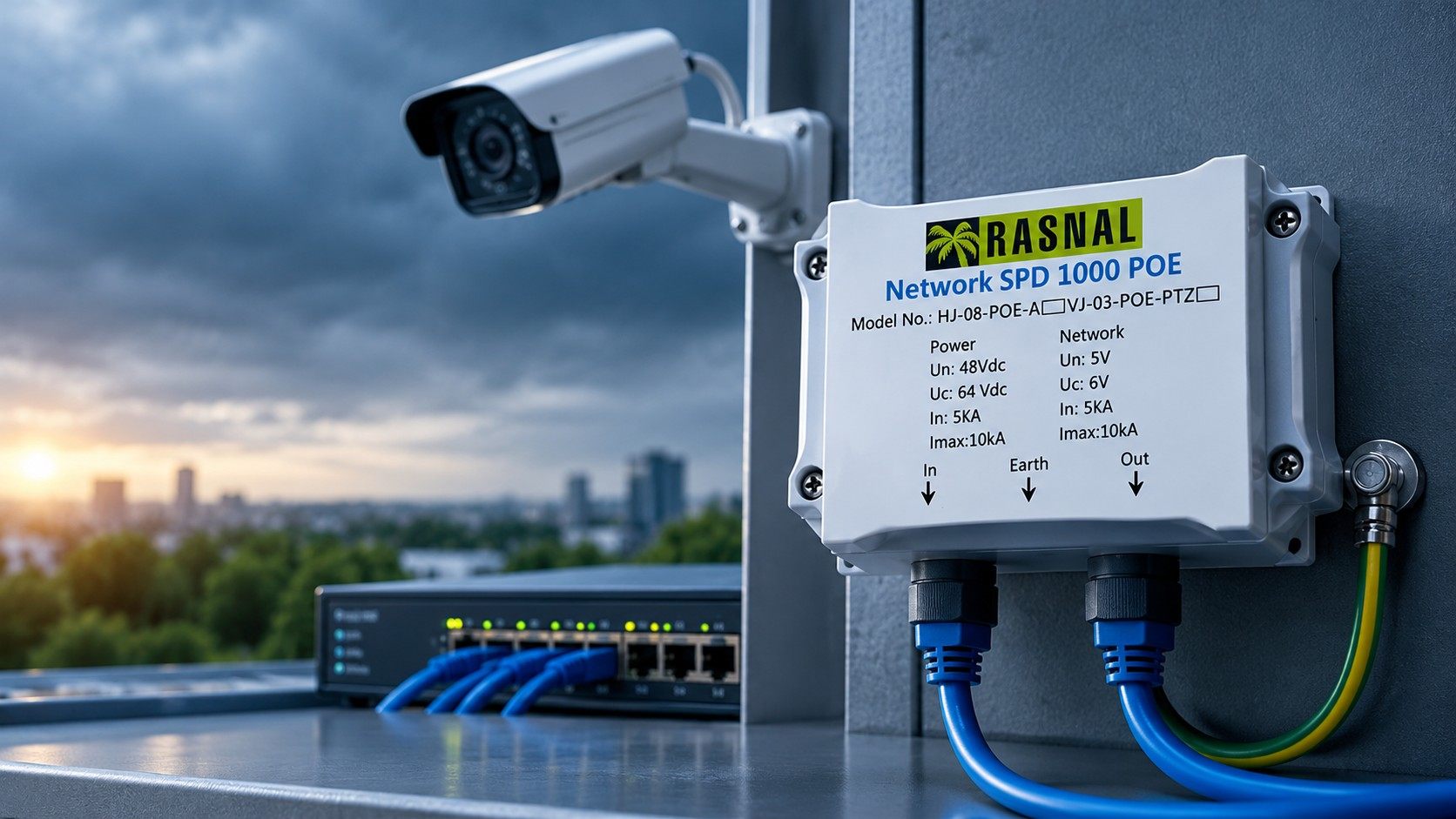
Most modern inverters report to an app through Wi-Fi, Ethernet or RS-485. If an Ethernet cable runs outdoors, for example to a router in another building or to an outdoor camera on the same network, protect it with Rasnal's RJ-45 surge protector for PoE++. It covers all 8 wires plus the shield and is IP66 rated for outdoor mounting.
Fire Safety for Inverter and Battery Cabinets
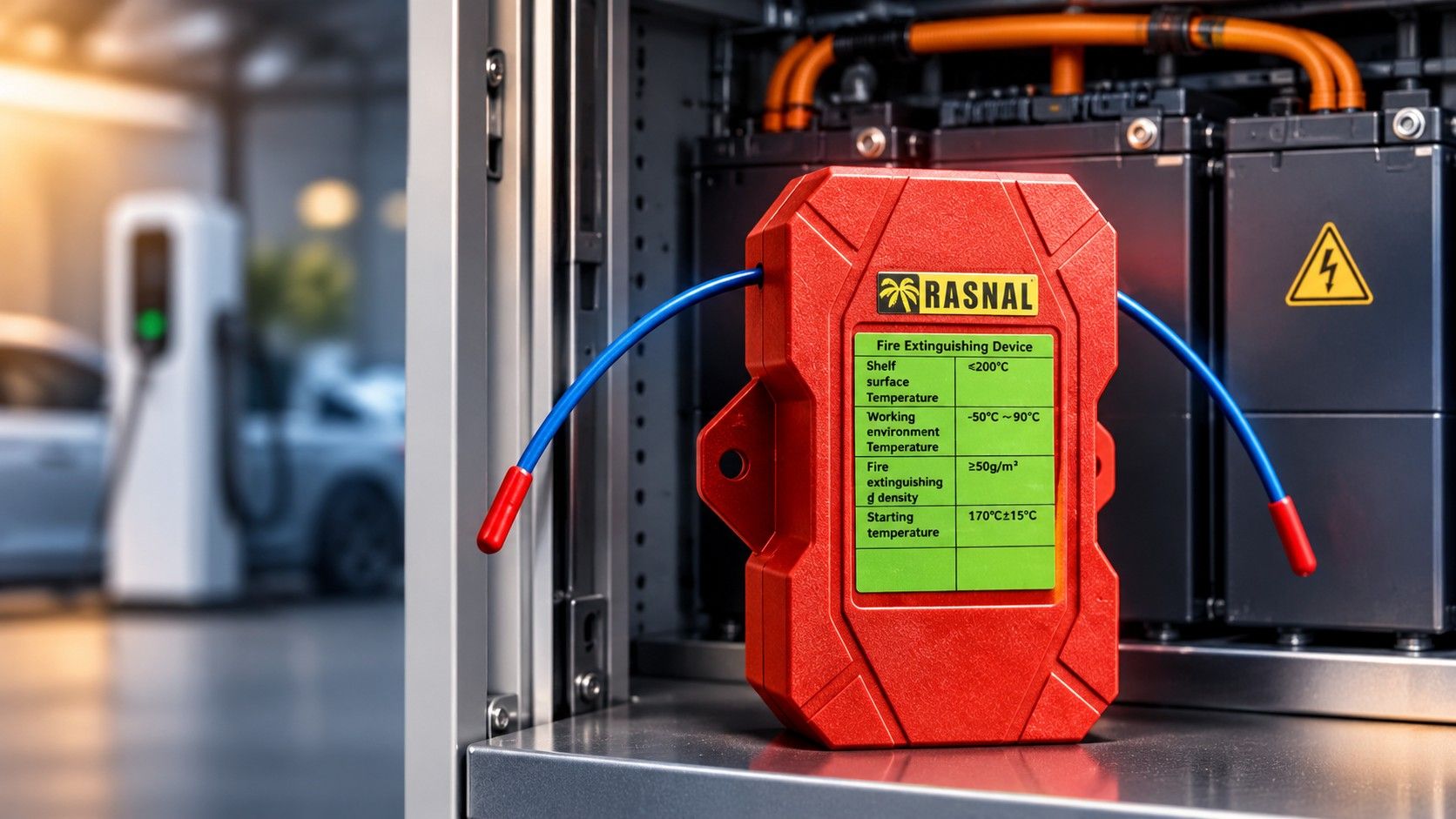
Inverters and lithium batteries are often installed in a utility room, a staircase corner or a garage, out of sight. Rasnal lists energy storage units, inverter cabinets and lithium-ion battery packs among the uses for its HAFED heat aerosol fire extinguishing device. The unit mounts inside an enclosure with adhesive, needs no wiring or power, activates automatically through a heat-sensitive wire and is rated for up to 10 years without maintenance.
It is a useful extra layer inside a closed battery or inverter cabinet. It does not replace the battery's own management system, good ventilation or the installer's safety measures.
What Surge Damage Looks Like in a Home Solar System
Surge damage is not always a dramatic burnt-out inverter. Often it shows up slowly. Watch for an inverter that shows grid or input faults after storms, monitoring that drops off and needs resetting, communication boards or Wi-Fi dongles that stop working, battery management errors, or a residual current breaker that trips more often than it used to. Any of these after thunderstorm season is a reason to have the system checked and the surge protection reviewed.
A Simple Protection Plan for a Typical Home
- Check your supply. Single phase homes use the VKP-1-AC on the main board. Three phase homes use the VKP-03-AC on a three phase board.
- Check your battery voltage. For 12, 24 or 48 V battery systems, add a VKP-01-DC on the DC side.
- Check the PV side. Confirm with your installer that a PV rated SPD matched to the string voltage is fitted in the DCDB.
- Check the earthing. Ask for the earth connections of the structure, inverter, DCDB and ACDB to be tested and bonded.
- Check data cables. Add an RJ-45 protector on any outdoor Ethernet run.
- Consider the cabinet. If the battery and inverter sit in a closed cabinet, ask about a HAFED unit.
- Have a licensed electrician install everything following the product instructions.
Who This Matters to Most
- Homeowners going solar or hybrid, especially in lightning-prone or high-surge areas.
- Residents in power-cut areas who depend on backup power during storms.
- Tech-savvy property owners with smart home devices on the same board.
- Small business owners running a shop or office on a hybrid system.
- Electricians and local solar contractors who want fewer inverter failures and warranty disputes.
- Commercial developers adding rooftop solar to residential projects, where protection can be planned at design stage.
Mistakes That Leave Inverters Exposed
- Relying only on the inverter's built-in protection. Many inverters include some internal protection, but it is sized for the inverter, not for strong external surges. Check your inverter's datasheet.
- Using a DC device outside its voltage rating. Battery side and PV side protection need devices rated for their own voltage.
- Thinking the lightning arrester covers everything. It protects the structure, not the wiring.
- Leaving earths unbonded. Separate earths can work against each other in a storm.
- Ignoring data cables. An outdoor Ethernet run is another surge path.
Protect the Investment That Powers Your Home
A solar or hybrid system is a long term investment, and the inverter is its heart. Protect the AC board, the battery side and the PV strings with devices rated for each circuit, bond the earths, and cover any outdoor data cable.
Rasnal covers the AC board with the VKP-1-AC, the low voltage DC side with the VKP-01-DC, data lines with the RJ-45 protector and cabinets with the HAFED. Tell Rasnal about your system: your supply type, inverter model and battery voltage. You will get a clear protection plan before you buy.
Internal and External Links Used
FAQs
Q1. Do solar inverters need surge protection?
Yes. Solar and hybrid inverters connect to the roof, the grid and the battery, so surges can reach them from several directions. Each path needs surge protection rated for that circuit.
Q2. Which surge protector do I need for a home solar system?
On the AC board of a single phase home, a unit like the Rasnal VKP-1-AC. On a 12, 24 or 48 V battery, a DC unit like the VKP-01-DC. On the PV strings, a PV rated SPD matched to the string voltage, usually fitted by the installer.
Q3. Is a lightning arrester enough to protect my solar inverter?
No. A lightning arrester protects the building from a direct strike. Surges from nearby strikes and the grid still travel along the wiring, so you also need surge protection at the boards.
Q4. Can I use the VKP-01-DC on my solar panel strings?
No. The VKP-01-DC is rated for 12, 24, 48 and 110 to 175 V DC systems such as batteries. PV strings usually run at much higher voltages and need a PV rated surge protective device.
Q5. Does earthing matter for solar inverter surge protection?
Yes. Surge protection needs a good earth path to work. Bond the structure, inverter and distribution box earths together, and add a low impedance reference at the board with a digital grounding device.
Explore Categories

Digital Grounding devices
Industrial & Network Solutions
Solar & Smart Energy
Fire Safety Systems
Surge Protection
CCTV & Security
Solar Energy