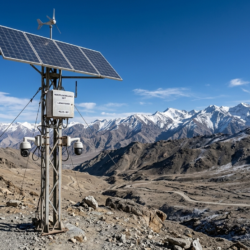

Lightning is often treated as a rare or unavoidable act of nature. But for critical infrastructure, telecom networks, CCTV systems, data centers, and industrial facilities, lightning is not a random event. It is a predictable electrical risk that can be engineered against.
A modern lightning protection solution is not just about diverting a lightning strike to the ground. It is about controlling energy, limiting surge propagation, and protecting sensitive electronics long before catastrophic failure occurs.
What Is a Lightning Protection Solution?
A lightning protection solution is a coordinated system of devices and grounding methods designed to:
- Intercept lightning-induced surges
- Safely divert excess energy
- Prevent overvoltage damage to equipment
- Maintain service continuity during storms
Unlike traditional lightning rods alone, modern lightning protection solutions focus on both direct strikes and indirect surges that travel through power, data, and signal lines.
This distinction is critical because most equipment damage occurs without a visible lightning strike.
Why Lightning Protection Systems Fail Without Line Protection
One of the biggest misconceptions is that earthing or a lightning arrester on the roof is enough.
In reality:
- Lightning energy couples into coaxial cables, Ethernet lines, and power conductors
- Surges enter buildings through telecom lines, PoE cables, CCTV feeds, and control wiring
- Damage often appears hours or days later as intermittent faults or silent failures
This is why effective lightning protection systems must include line-level surge protection devices, not just external air terminals.
Core Components of a Modern Lightning Protection System
A reliable lightning protection solution is layered. Each layer stops energy at a different point.
- External Lightning Interception and Grounding
- Air terminals or lightning rods
- Down conductors
- Low-impedance grounding system
This layer handles direct strikes, but does not protect electronics alone.
- Surge Protection Devices at Entry Points
This is where most real-world protection happens.
Lightning-induced surges travel through:
- RF and antenna cables
- Ethernet and PoE lines
- Control and signal wiring
Without protection here, surges bypass grounding completely.
Key Lightning Protection Devices for Electronic Systems
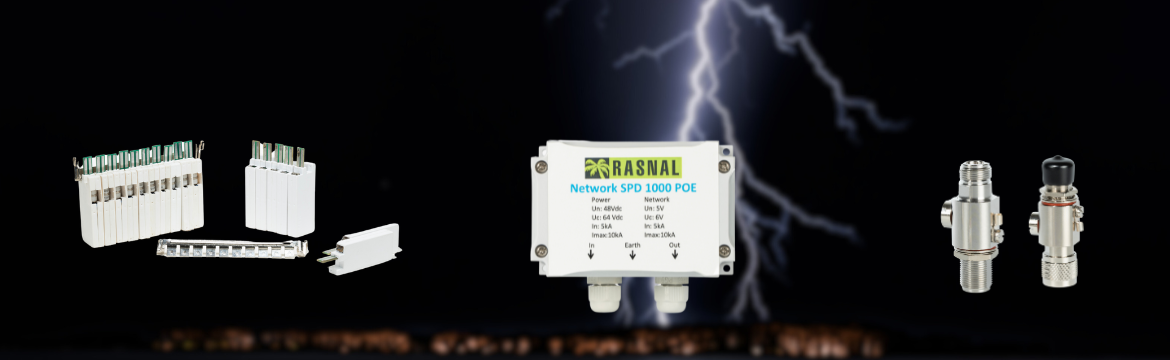
- Coaxial Surge Protector
Used for:
- Antenna lines
- RF communication systems
- CCTV camera feeds
A coaxial surge protector clamps transient voltage spikes and safely redirects energy to ground before it reaches sensitive receivers.
It is essential for:
- Telecom towers
- Wireless ISP infrastructure
- Outdoor surveillance systems
Without it, even distant lightning can destroy RF equipment instantly.
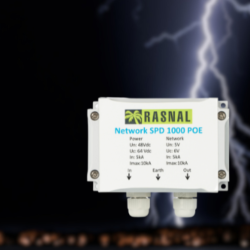
- RJ-45 Surge Protector for PoE++
Ethernet cables are one of the most vulnerable entry paths for lightning surges.
An RJ-45 surge protector for PoE++ is designed to:
- Protect high-power PoE devices
- Prevent damage to switches, cameras, and NVRs
- Maintain data integrity during surge events
This device is critical for:
- IP CCTV networks
- Smart city infrastructure
- Industrial Ethernet systems
Standard Ethernet protection is often insufficient for PoE++ loads.
- Multilayer Line Protection Unit (5-Stage IPM)
For mission-critical environments, single-stage protection is not enough.
A multilayer line protection unit uses a 5-stage protection architecture to:
- Absorb high-energy surges
- Clamp fast transients
- Filter residual noise
- Protect against repeated surge events
This type of lightning protection product is ideal for:
- Data centers
- Control rooms
- Telecom shelters
- Industrial automation systems
It addresses both lightning and internally generated surges.
How to Choose the Right Lightning Protection Solution
When evaluating lightning protection solutions, decision-makers often ask:
Is lightning really a risk in my area?
India and many global regions experience high lightning density. But even low-lightning zones face surge risks from nearby strikes and grid disturbances.
Do I need protection if equipment is indoors?
Yes. Most damage occurs through connected cables, not direct exposure.
Is one device enough?
No. Effective lightning protection systems rely on layered defense, not a single product.
Lightning Protection Systems vs Traditional Earthing
Lightning Protection Systems:
- Traditional Earthing
- Focuses on ground resistance
- Passive protection
- Limited electronic safety
- Often reactive
Traditional Earthing:
- Modern Lightning Protection Solution
- Focuses on energy control
- Active surge suppression
- Designed for sensitive equipment
- Preventive by design
This shift is why modern infrastructure relies on engineered lightning protection products, not just compliance checklists.
Future-Ready Lightning Protection: What Buyers Will Ask Next
As infrastructure becomes smarter, future queries are already emerging:
- Can lightning protection support higher PoE loads?
- How does protection scale with IoT and AI systems?
- Can protection devices be monitored remotely?
- How do internal electrical surges compare to lightning surges?
Choosing modular, layered systems today avoids costly redesigns tomorrow.
Final Takeaway
A lightning protection solution is no longer optional infrastructure insurance. It is a system-level requirement for uptime, safety, and long-term reliability.
By combining:
- External interception
- Coaxial surge protection
- RJ-45 PoE surge defense
- Multilayer line protection units
Modern lightning protection systems stop damage before it reaches your equipment, not after failure occurs. Protection is not about fear of lightning. It is about engineering certainty into unpredictable environments.
Choosing the right lightning protection solution isn’t just about safeguarding equipment. It’s about ensuring uninterrupted operations and long-term reliability. Rasnal designs layered lightning protection systems that defend power, data, and communication lines before damage occurs.
Build with confidence. Explore Rasnal’s lightning protection solutions to create a resilient defense for your infrastructure.